7 Best Digital Nomad Visas for Remote Workers in 2026
Table of contents
- 1. Spain, International Teleworker Visa
- Where Spain fits, and where it doesn't
- 2. Portugal, D8 Remote-Work Visa
- The trade-off is long-term intent versus process
- 3. Estonia, Digital Nomad Visa
- Don't confuse digital administration with business permission
- 4. Croatia, Temporary Stay for Digital Nomads
- Longer stay, but not a casual application
- 5. Italy, Digital Nomad / Remote Worker Visa
- A specialist route, not a general remote-work pass
- 6. Thailand, Destination Thailand Visa
- Useful for repeat visits, not a tax shortcut
- 7. Malaysia, DE Rantau Nomad Pass
- Lower-cost entry doesn't solve every operational problem
- Top 7 Digital Nomad Visas: Side-by-Side Comparison
- Pick Your Visa by Constraint, Not by Country Ranking
More than 45 jurisdictions offered digital-nomad or remote-work visas and permits by November 2024, according to EY's global immigration review. That's a lot of choice, but it doesn't make finding the right visa easier. Many lists focus on destination appeal while glossing over the requirements that can rule you out before you book a flight.
The practical way to compare the best digital nomad visas is to start with your constraints, not a country ranking. Check the income you can document, how long you need to stay, and whether the route fits your work arrangement, whether you're an employee, freelancer, or founder serving clients from abroad. A visa that fits someone else's circumstances may not fit yours.
Use the options below as decision branches. The published requirements can change, and a visa approval doesn't settle your tax, banking, or business-compliance questions. Before you plan your move, confirm the current rules with the authority handling your application, and consider what you'll need for compact gear for working anywhere.
1. Spain, International Teleworker Visa
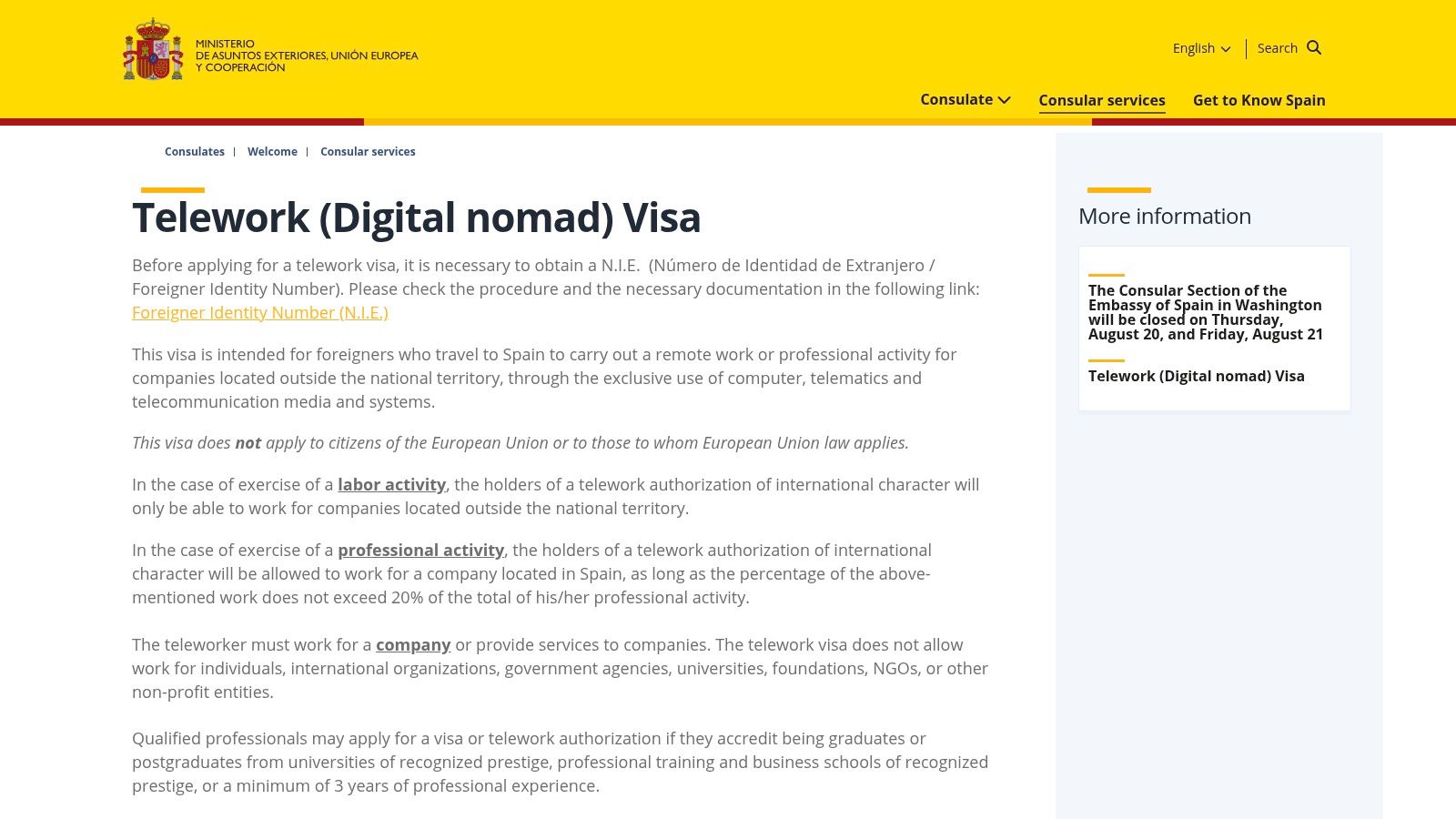
Spain's International Teleworker Visa is worth investigating if your work is remote and your income comes primarily from businesses outside Spain. The Spanish consular guidance describes a route intended for remote employees and independent professionals. That distinction matters: a freelancer's client mix may face different conditions from an employee's relationship with an overseas employer.
The practical test isn't just whether your job can be done online. You'll need to document your professional qualifications or experience, your working arrangement, and your income. Freelancers should pay particular attention to any limits on work for Spanish clients, while employees should verify that their employment arrangement fits the visa's terms.
Where Spain fits, and where it doesn't
Spain may suit professionals who want a European base and can assemble a thorough application file. It's a less comfortable choice for applicants whose work evidence is informal, whose income fluctuates without clear records, or whose business depends on serving local Spanish clients. Consular procedures and appointment logistics can also vary, so build those into your planning rather than treating the application as a formality.
Check your client mix: If you're self-employed, make sure you understand which work you can perform for Spanish clients before relying on the visa as your business plan.
If you're comparing European options, review the Greek digital nomad visa guide alongside Spain's current official requirements. Don't choose based on a headline threshold alone. Compare the work you'll do, the documents you can produce, and what happens if your client base changes.
2. Portugal, D8 Remote-Work Visa
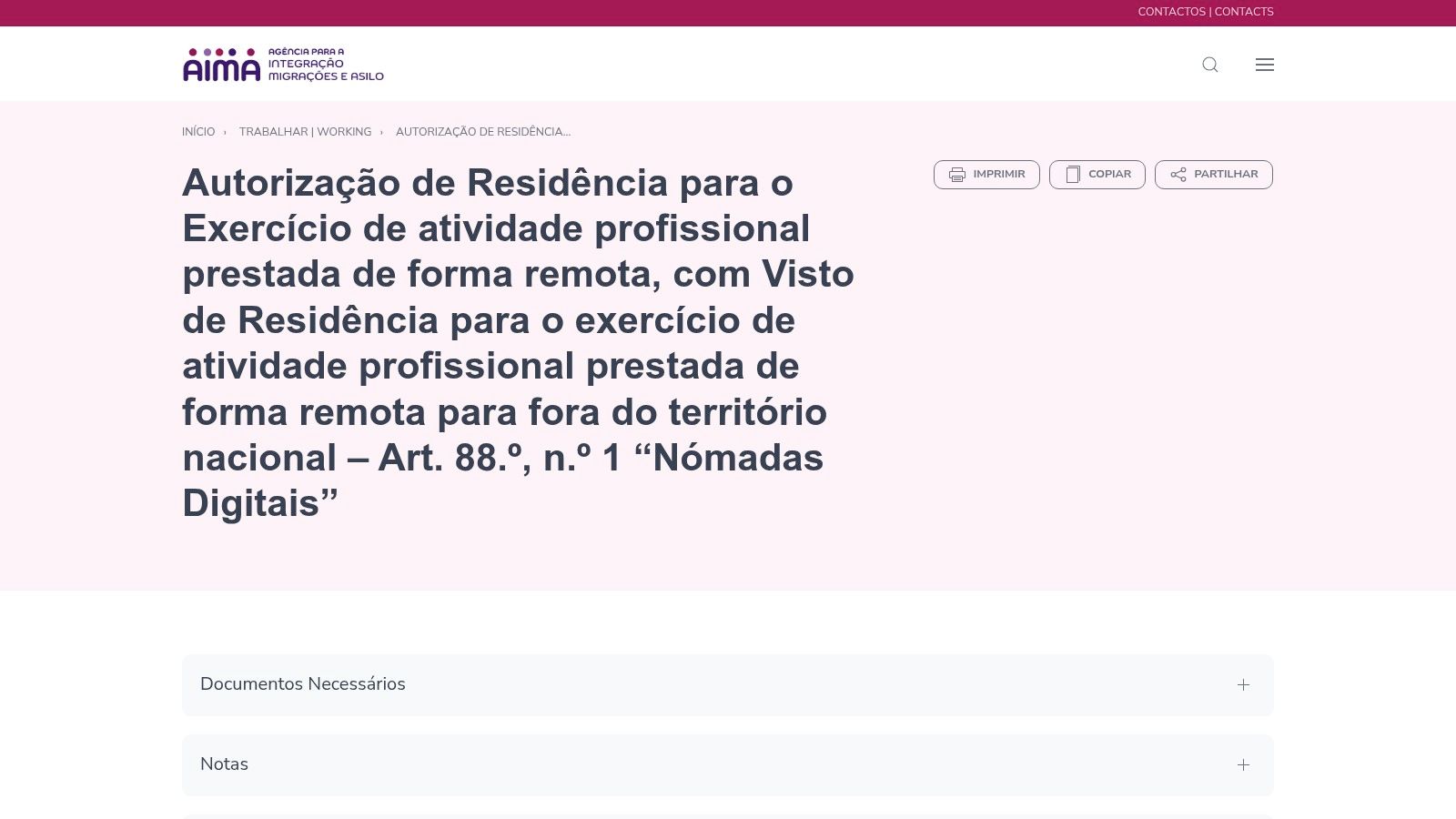
Portugal's D8 route stands out for people seeking a residence-oriented option rather than a short stop. The pathway involves a residence visa and a subsequent residence-authorization process, so approval is not a single administrative finish line. Portugal's official remote-work residence authorization information is the place to verify the current process and documentation.
Portugal's earlier program guidance used an income test tied to the minimum wage and required evidence of remote employment or independent professional work. It also called for travel insurance and identity and background documentation. Those details illustrate why applicants should assess more than income: a strong application depends on proving the underlying work arrangement and assembling the required paperwork.
The trade-off is long-term intent versus process
Portugal can make sense for employees and self-employed professionals who want to establish a longer-term base and are prepared to manage separate visa and residence stages. The drawback is administrative friction: appointment availability, document requirements, and the transition after arrival all need attention. Don't assume that a visa's validity answers how long a residence authorization lasts or how renewal works. Confirm those terms directly before you make housing or business commitments.
Portugal's verified historical income benchmark was demanding for lower-income freelancers and early-stage founders. Since program rules and thresholds can change, treat older figures as context, not a current eligibility promise. For founders, the bigger question is whether the relocation also leaves your tax position, invoicing, and company administration workable.
3. Estonia, Digital Nomad Visa
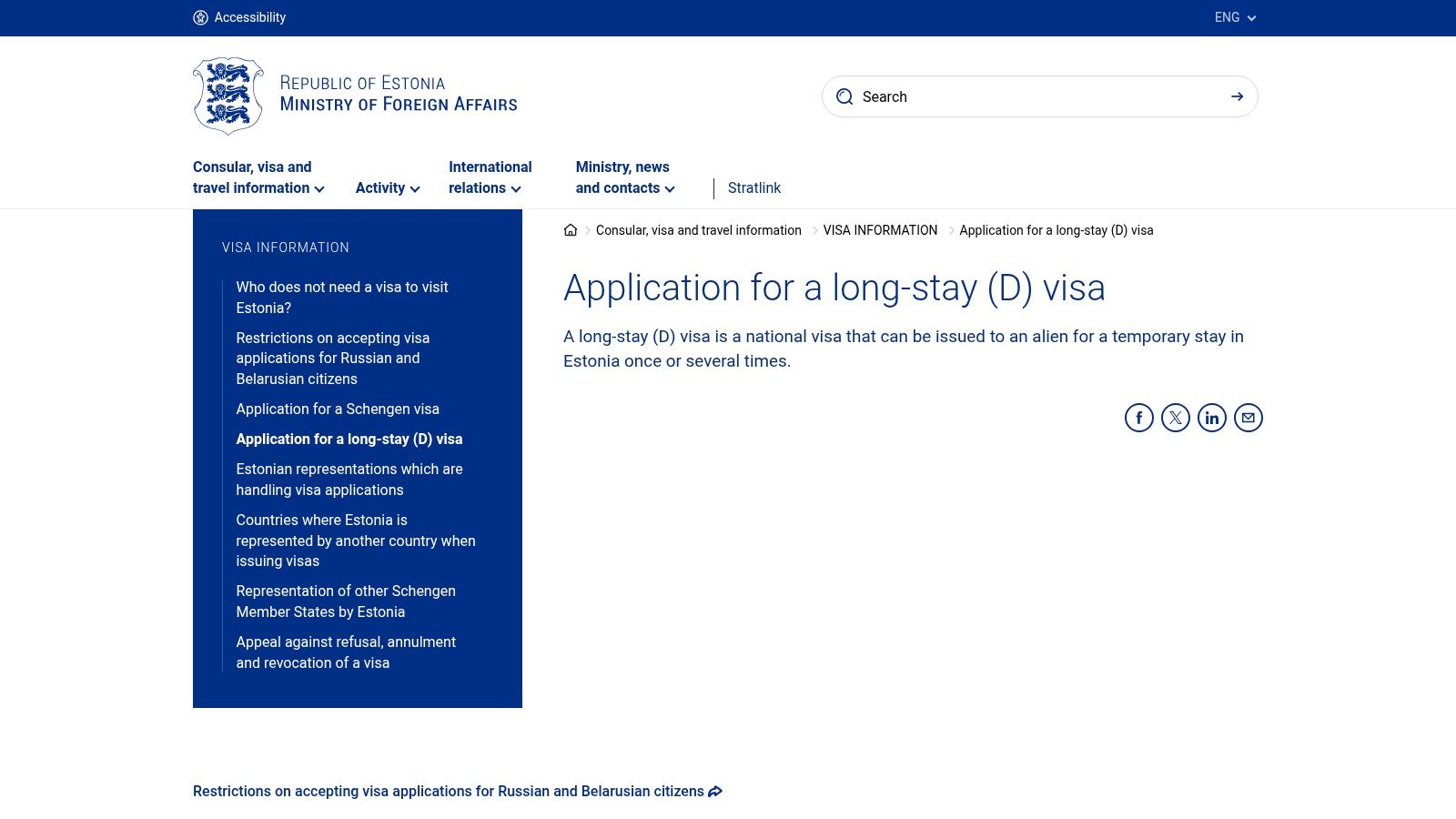
Estonia uses its national long-stay visa framework for remote professionals. That makes it important to separate permission to stay from other services that may sound similar. Estonia's long-stay D-visa guidance explains the application route and financial-means requirements. Read the visa terms themselves rather than assuming a digital business service grants immigration or work rights.
This option may suit someone who wants a defined temporary stay in Northern Europe and can support an application with clear evidence of remote work and financial means. It's not a substitute for checking whether your specific employer, freelance contracts, or business structure qualify. Applicants should also verify where they're permitted to apply and whether an in-person appointment is required for their circumstances.
Don't confuse digital administration with business permission
Estonia's reputation for digital services can make the route sound like an all-in-one solution. It isn't. E-residency is separate from a residence permit or work visa, and a temporary visa shouldn't be mistaken for permission to take local employment or a path to permanent residence.
The fit is strongest for remote workers who value a structured application and have the financial documentation to support it. It's weaker for someone who needs a long-term residence plan, expects to find local clients, or is relying on an online business registration service to settle immigration questions. Keep those decisions separate, and verify each with the appropriate authority.
4. Croatia, Temporary Stay for Digital Nomads
Croatia's temporary-stay category is aimed at eligible non-EU, non-EEA, and non-Swiss nationals whose remote work is tied to a foreign employer or business. The country has extended the permitted stay for digital nomads to up to 18 months, as reported in the OECD's review of recent migration-policy developments. That longer window may suit someone who wants continuity without immediately pursuing a different residence route.
The Croatian Ministry of the Interior's digital-nomad temporary-stay guidance sets out the application requirements. Expect to substantiate your remote-work arrangement and prepare supporting documents, including health-insurance and address evidence. Verify the current financial test with the ministry before you apply.
Longer stay, but not a casual application
Croatia is more promising for applicants who can show stable foreign-linked work and are willing to handle the documentation carefully. It's less straightforward if you lack a suitable Croatian address, have incomplete records, or need to work for local clients. Don't treat the maximum stay as an automatic entitlement; the actual outcome depends on meeting the applicable requirements.
Family plans need their own check. Dependants may have a route through family reunification, but don't assume they're covered by the main applicant's approval without additional steps. Before committing to a lease or moving a team, confirm the current rules on eligibility, supporting documents, and what happens when the permitted stay ends.
5. Italy, Digital Nomad / Remote Worker Visa
Italy's visa framework distinguishes between independent professionals and remote employees. That can be useful if your work arrangement is clearly one or the other, but it doesn't make the route a fit for every remote worker. The Italian consular guidance describes a program for non-EU nationals and requires applicants to meet a high-specialization standard.
That specialization requirement is the key filter. A healthy bank balance or a job that happens to be remote may not be enough if your professional qualifications or experience don't satisfy the applicable criteria. Applicants should also check the consulate responsible for their jurisdiction, because application instructions and appointment access can differ.
A specialist route, not a general remote-work pass
Italy may work for a consultant or employee who can clearly demonstrate specialized, remote-compatible work. It's a weaker bet for someone whose work history is difficult to document or whose role doesn't obviously meet the consulate's stated standard. Fees and documentary instructions can change, so use the current consular information rather than relying on an old checklist.
Location appeal shouldn't decide the application for you. First check your eligibility and the administrative route, then weigh where in Italy you could realistically work and live. If you're comparing nearby destinations, Mazurly's France digital nomad visa guide can help broaden the regional comparison, but verify each country's rules independently.
6. Thailand, Destination Thailand Visa
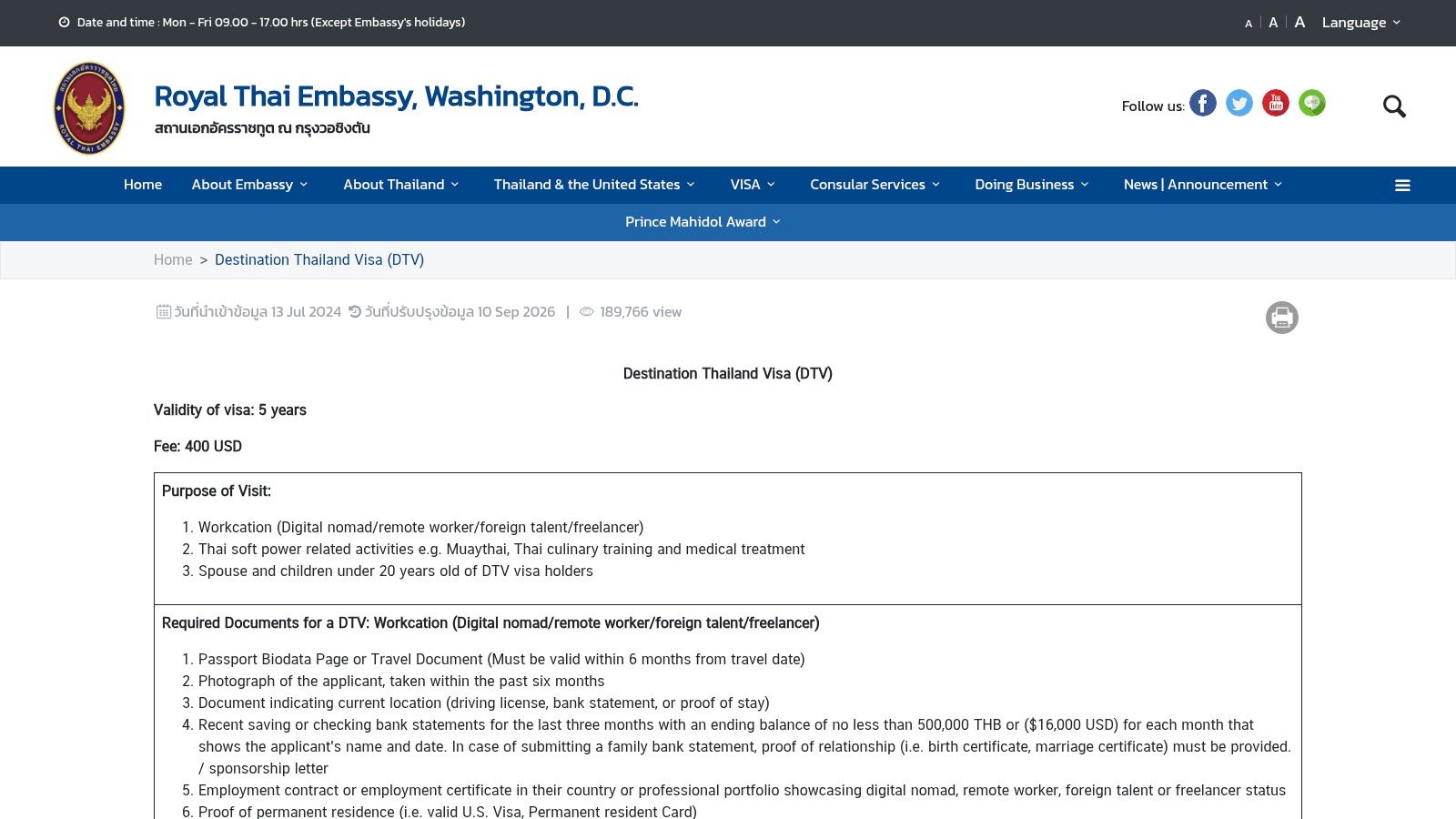
Thailand's Destination Thailand Visa includes a workcation category for remote workers, digital nomads, foreign talent, and freelancers. The Royal Thai Embassy in Washington's DTV guidance provides a jurisdiction-specific checklist, including evidence of remote work or professional status and financial documentation. Applicants should follow the instructions of the embassy or consulate that will handle their application, since requirements may differ.
The practical advantage is flexibility for people who want to return to Thailand for work-focused stays. But visa validity isn't the same as permission to remain continuously for that entire period. Check the rules for each stay and any extension before you build a long-term housing plan around the visa.
Useful for repeat visits, not a tax shortcut
The DTV may suit freelancers and remote employees who can document their work and want a repeat-visit option. It's less suitable if you need a straightforward continuous-residence arrangement or if you can't meet the evidence requirements. Check the application fee and current financial proof rules with the responsible office rather than assuming one embassy's checklist applies everywhere.
Also separate immigration permission from tax planning. A visa can permit a stay without settling how your income will be taxed or what reporting obligations you may have. If you're considering other destinations in the region or beyond, use Mazurly's Colombia digital nomad visa guide as another comparison point, then assess tax and compliance separately.
7. Malaysia, DE Rantau Nomad Pass
Malaysia's DE Rantau program is a Professional Visit Pass administered through the Malaysia Digital Economy Corporation. MDEC's DE Rantau Nomad Pass page covers technology and non-technology professionals, including freelancers, contractors, and remote employees. That broader professional scope can make it worth checking if your role doesn't fit a narrowly tech-focused program.
The pass offers a defined temporary-stay route, but processing isn't just about submitting a complete file. MDEC has reported delays connected to technical and system-integration issues. Applicants should account for possible uncertainty rather than scheduling a relocation around an assumed approval date.
Lower-cost entry doesn't solve every operational problem
DE Rantau may suit someone whose work and contract records meet the program's criteria and who wants to include eligible dependants. The trade-offs are practical: MDEC has noted that many Malaysian banks don't accept the pass for opening a local bank account, and a Professional Visit Pass may not function like a standard residence permit in every situation.
Plan your money workflow before moving: Confirm how you'll receive client payments, pay local expenses, and maintain access to business banking if opening a local account proves difficult.
For founders and freelancers, that banking question can matter as much as eligibility. Test your invoicing and payment arrangements before you relocate, and confirm the latest processing guidance directly with MDEC.
Top 7 Digital Nomad Visas: Side-by-Side Comparison
| Visa | 💰 Eligibility & resource requirements | 🔄 Process complexity | 📊 Stay / expected outcome | ⭐ Ideal use case / key advantage |
|---|---|---|---|---|
| Spain, International Teleworker Visa | €2,442/month for a solo applicant; prove remote work and qualifications or 3+ years' experience | Moderate: substantial documentation; consular appointments vary | Potential route to longer residence authorization for eligible applicants already in Spain | Remote employees and freelancers seeking a European base; comparatively low listed income threshold |
| Portugal, D8 Remote-Work Visa | €3,680/month listed for 2026; foreign employer or clients | Higher: visa followed by a separate residence-permit process | Initial authorization lasts 2 years; renewable for successive 3-year periods | Remote workers seeking a longer-term residence option |
| Estonia, Digital Nomad Visa | €3,960/month in financial means; €120 D-visa fee | Moderate: in-person application may be required | Temporary stay under the long-stay D-visa framework | Remote professionals seeking a defined temporary stay in a digitally oriented country |
| Croatia, Temporary Stay for Digital Nomads | €3,622.50/month; proof of remote work, insurance, criminal record, and local address | Higher: extensive documents and accommodation evidence; a 6-month gap generally applies before a new qualifying application | Temporary stay of up to 18 months | Remote workers seeking a relatively long temporary stay |
| Italy, Digital Nomad / Remote Worker Visa | Must meet high-specialization criteria; fees vary quarterly | Moderate to high: requirements and appointments vary by consulate | Visa route for eligible non-EU remote workers; check local consular guidance | Specialized employees, freelancers, or consultants; recognizes both employed and independent work |
| Thailand, Destination Thailand Visa (DTV) | At least 500,000 THB shown for each of the previous 3 months; Washington-listed fee is $400 | Moderate: document checklist; requirements vary by application location | 5-year visa validity; this does not mean 5 years of continuous residence | Freelancers and remote workers seeking flexibility for repeat stays |
| Malaysia, DE Rantau Nomad Pass | Annual income above US$24,000; listed fees are MYR 1,000 for the main applicant and MYR 500 per dependent | Potentially slower: MDEC reports processing delays | 3–12 months initially, renewable for up to a further 12 months | Tech and non-tech remote professionals seeking a lower listed income threshold and pass fees |
Pick Your Visa by Constraint, Not by Country Ranking
Start with the constraint that can eliminate you fastest. Match your documented income to the current threshold for the visa you're considering. Then choose a stay length that fits your actual plan, not the longest duration in a marketing summary. Finally, confirm that the route accepts your work arrangement, because an employee with a foreign employer and a freelancer with a changing client roster may face different proof requirements.
Use a short application-readiness check before you commit:
Confirm current rules: Check the responsible consulate or immigration authority for the latest income test, eligibility terms, application steps, and renewal conditions.
Build your evidence file early: Gather employment or client contracts, proof of income, qualifications where relevant, insurance documents, and any required identity or background records.
Test your business operations: Work out how you'll invoice, receive payments, access funds, and manage company administration from the destination.
Review tax exposure separately: A visa answers an immigration question, not necessarily whether your stay creates tax-residency, payroll, reporting, or company-compliance obligations.
That last step deserves more attention than it gets in many visa comparisons. The OECD has cautioned that the benefits of these programs for host countries remain uncertain, while longitudinal evaluation is limited. For applicants, the parallel lesson is to treat outcomes such as tax treatment and business continuity as questions to verify, not assumptions built into a visa's headline appeal.
Your best digital nomad visa is the one that fits your paperwork, work structure, and intended stay without creating avoidable operational problems. Use Kohru's remote work tips to plan for the day-to-day work setup, and consult Mazurly for practical guidance on cross-border operations, payments, banking, and cost-of-living planning. The visa is the start of a working setup, not the end of the research.
Mazurly brings visa and destination planning together with practical guidance on payments, banking, invoicing, and running a location-independent business. Compare your next move and prepare the operational details before you relocate by visiting Mazurly.