
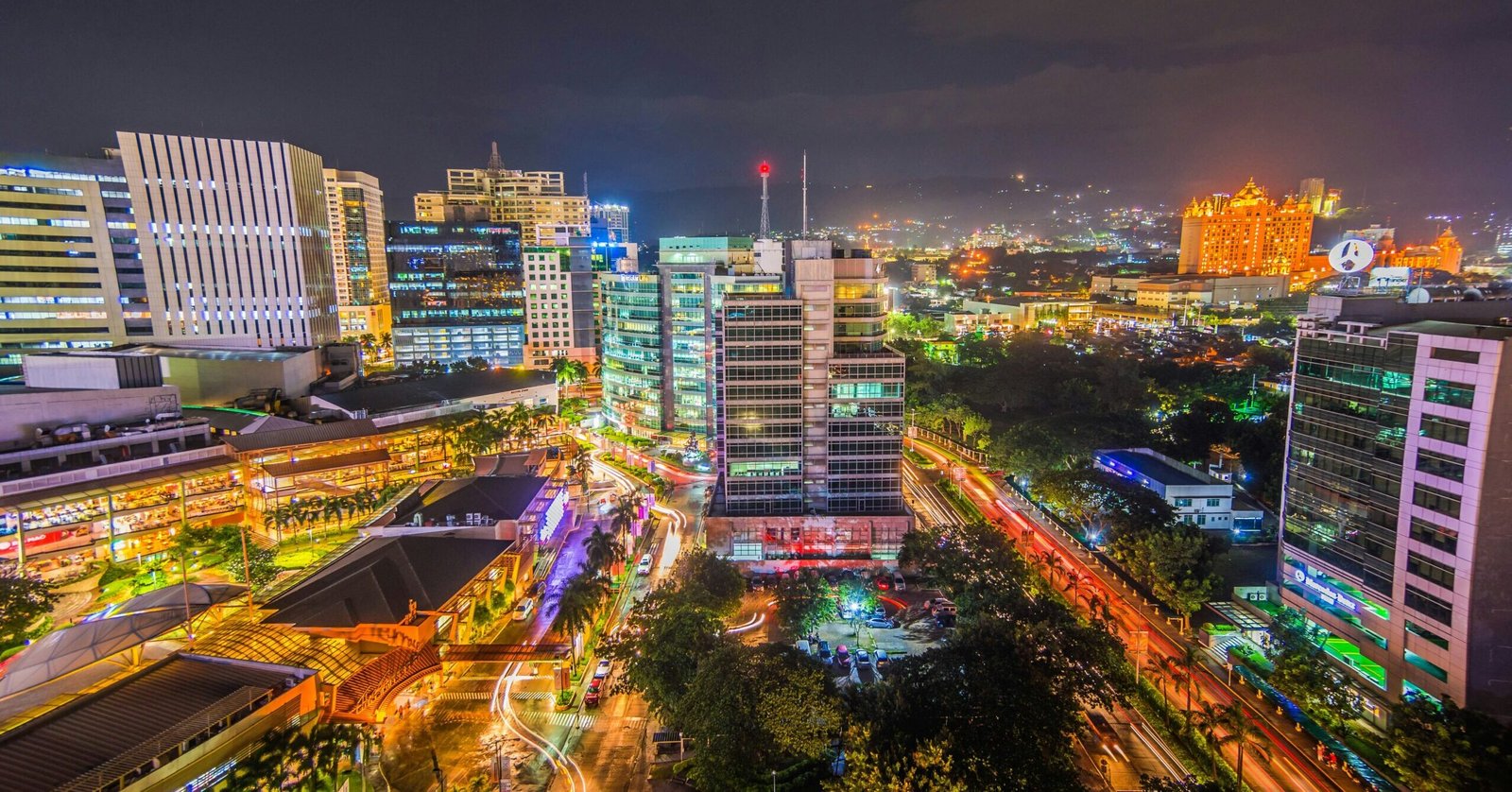
 Imagen principal
Los precios se muestran en PHP Por defecto (peso filipino). Cambie a USD/EUR para una comparación rápida y utilice el conversor que aparece a continuación para las principales divisas.
Convierta presupuestos y estimaciones de alquiler utilizando tasas de referencia diarias (basadas en el BCE). Solo las principales divisas.
Cebú es notablemente más barato, a menudo entre 20 y 401 TP3T menos que Manila. El alquiler, la comida y el entretenimiento son generalmente más asequibles, sin dejar de ofrecer excelentes servicios urbanos. Es una opción popular para quienes buscan una base en una gran ciudad sin la presión de los precios de Manila.
Mejor que Manila, pero aún no es fácil. Hay congestión (sobre todo en IT Park, Mandaue y los puentes hacia Mactan), pero suele ser más fluida que en Manila. La calidad del aire es generalmente más limpia y la brisa marina ayuda, pero el calor y la humedad son intensos durante todo el año.
Cebú tiene su propia identidad: un ambiente más relajado, con el equilibrio propio de una ciudad insular. Ofrece barrios modernos (como IT Park) sin la intensidad constante de Manila, además de un rápido acceso a playas, buceo e islas cercanas. Es la comodidad de la ciudad con la tranquilidad de una escapada costera.
Fuerte pero más pequeña que Manila. El Parque Tecnológico es el principal centro para trabajadores remotos (espacios de coworking, cafeterías, condominios) y cuenta con una activa comunidad de expatriados (incluidos muchos jubilados). Por lo general, está más integrada a la cultura filipina que la gran "burbuja internacional" de Manila.“
Sí, el inglés se habla ampliamente en zonas comerciales, centros comerciales y la mayoría de los servicios. Pero el cebuano (bisaya) es el idioma cotidiano, y aprender cebuano básico supone una gran mejora en la calidad de vida en mercados, barrios y para forjar amistades locales más profundas.
La infraestructura puede ser caótica: atascos de tráfico, obras constantes, cortes de luz ocasionales e internet irregular fuera de las zonas más exclusivas. El calor y la humedad hacen que el aire acondicionado sea indispensable para muchos. Al igual que en gran parte de Filipinas, también se puede apreciar de cerca la marcada desigualdad.
Cebú es ideal para jubilados y trabajadores remotos que buscan precios accesibles, un ambiente amigable con el inglés y fácil acceso a playas e islas, sin la intensidad de Manila. Representa un excelente punto intermedio entre la comodidad de la gran ciudad y la tranquilidad provincial.